


What is a lien waiver in construction? A plain-English guide for GCs and subs
A lien waiver is the construction industry's receipt for payment. Here's how it fits into the owner → GC → sub → sub-sub payment chain, and when to sign each type.
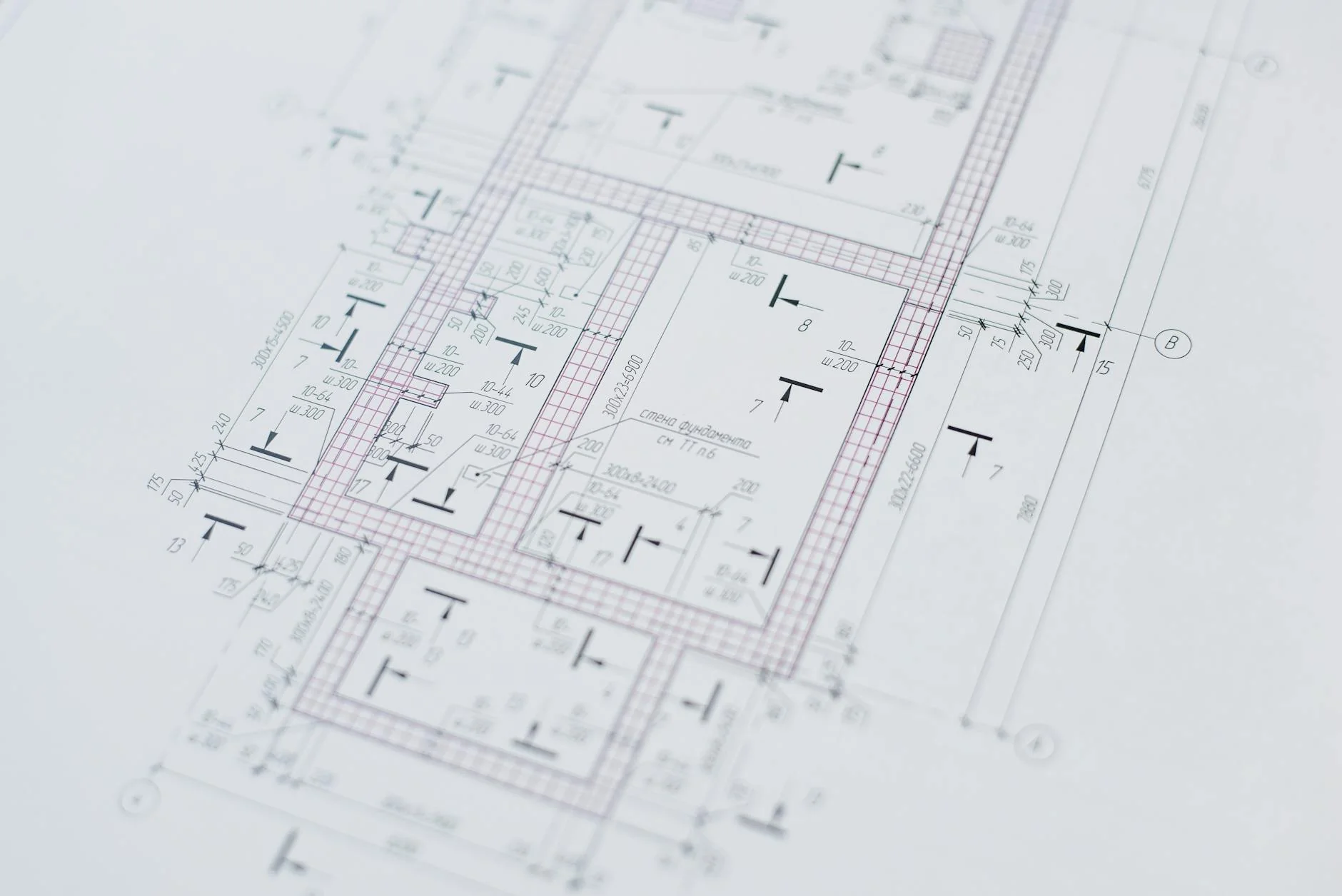
A lien waiver in construction is a signed document that says: I got paid for this work, so I won't file a lien on the property for that amount.
It's the receipt that keeps the payment chain honest. Owner pays the general contractor, GC pays the subs, subs pay their sub-tier subs and suppliers. At every step, the party getting paid signs a waiver releasing their lien rights for that slice of the job. Skip the waiver and the money keeps flowing, but the legal claims to the property pile up underneath like unpaid parking tickets.
This post covers what a lien waiver actually is, how it fits into the construction payment chain, the four types you'll see, when to sign each one, and the mistakes that cost both GCs and subs real money every quarter.
What a lien waiver actually does
A mechanic's lien is the legal claim a contractor, subcontractor, or supplier can file against a property when they haven't been paid for the work or materials they put into it. The lien attaches to the property's title. Until it's resolved, the owner can't sell or refinance the property without the claimant getting paid.
A lien waiver is the document that gives up that right. When a sub signs a waiver, they're trading their lien rights (the most powerful collection lever in U.S. construction law) for the payment they're about to receive or just received.
That's the trade. Money flows down. Lien rights flow up, signed away, in exchange.
The reason this matters: the property owner doesn't have a contract with your subs or your subs' subs. If a sub-tier sub doesn't get paid and files a mechanic's lien, the owner gets dragged into a payment dispute they had no part in. The waiver chain is what protects the owner from getting blindsided by a payment problem two layers down.
How lien waivers move through the payment chain
A simple residential framing job has at most three layers:
- Owner pays the general contractor.
- General contractor pays the framing sub.
- Framing sub pays the lumber supplier and the carpenters on payroll.
A commercial project can have five or six. A hospital build with steel, MEP, low-voltage, and finishes might have a tier-three sub installing fire dampers who's never met the owner.
Every party at every tier who provides labor or materials has lien rights. Every payment down the chain triggers a waiver up the chain. Here's what that looks like in practice on a single $400,000 progress payment:
- Owner cuts a $400,000 check to the GC. Before the check clears, the GC has already collected conditional waivers from every sub who's billing for that pay period. Once the GC's check clears, the GC signs an unconditional waiver to the owner for that $400,000.
- GC distributes payment to the subs. Say it splits as $150,000 to electrical, $120,000 to mechanical, $80,000 to framing, $50,000 to drywall. Before each sub gets their check, the GC has a conditional waiver from them. Once each check clears, each sub signs an unconditional waiver back to the GC.
- Each sub pays their suppliers and sub-tier subs. The electrical sub paying their wire supplier collects a conditional from the supplier first, then an unconditional once the supplier's check clears.
If any of those waivers go missing, the lien risk lives at that gap. A supplier who never signed an unconditional after getting paid still technically has lien rights for that amount. A clean job has every gap filled in. A messy job has signatures missing four tiers down that nobody notices until the owner tries to refinance and a title search lights up.
For a deeper read on the four-type framework, conditional vs unconditional lien waivers covers when each one fits.
The four types of lien waivers
Every lien waiver you'll see in U.S. construction is one of four combinations:
| Type | Payment phase | When the release fires | Sign when |
|---|---|---|---|
| Conditional progress | Mid-job pay period | Only when the payment clears | Before the check is sent |
| Unconditional progress | Mid-job pay period | The moment it's signed | After the payment clears |
| Conditional final | Last payment of the job | Only when the final payment clears | Before the final check is sent |
| Unconditional final | Last payment of the job | The moment it's signed | After the final payment clears |
The two axes are payment phase (progress vs final) and payment status (we're about to pay vs we already paid).
Conditional means safety net. The lien rights only release if the payment actually arrives in the sub's account. If the check bounces, the funds reverse, or the wire never lands, the conditional waiver has no effect. The sub keeps their lien rights.
Unconditional means no safety net. The lien rights release the second the sub signs, regardless of whether the payment ever arrives. That's why every state with a statutory form puts a bold-face warning at the top of the unconditional version: do not rely on this document unless satisfied that the claimant has received payment.
The pattern that works for both sides: the GC sends conditional with the pay app, the sub signs it, the GC cuts the check. Once the check clears, the GC sends unconditional, the sub signs that one too, and the period closes out clean. Conditional before, unconditional after. Don't mix them up. (We've seen GCs send unconditional first because the form was the top template in their folder. The sub signs, the upstream check from the owner bounces, and the sub has just released lien rights for $80,000 on a payment that's never coming.)
State-by-state: when generic forms don't work
In 38 states, you can use a generic conditional or unconditional waiver and it'll be enforceable, as long as it identifies the parties, the property, the amount, and the through-date.
In 12 states, you can't. These states have statutory forms with prescribed language, and a waiver that doesn't substantially follow that language is not enforceable in court. The list:
- California (Civil Code §8132–§8138, four required forms)
- Texas (Property Code Chapter 53)
- Florida
- Nevada
- Arizona
- Georgia
- Mississippi
- Missouri
- Wyoming
- Utah
- Massachusetts
- Michigan
If the project is in one of those states, the generic form your accounting software ships with is a liability, not an asset. The sub can sign it, take the money, and still file a lien because the form didn't follow the statute.
For California specifically, the California lien waiver requirements post walks through all four Civil Code forms. For Texas, the Texas lien waiver requirements post covers the Chapter 53 forms, including the rule that you can't pre-sign away lien rights at contract execution.
Who actually requires lien waivers
Three parties drive the lien waiver requirement, in order of pressure:
1. The lender. Construction loans almost always require the lender to verify clean lien status before each draw. The owner submits a draw package; the lender wants conditional waivers from everyone billing on that draw, and unconditional waivers for everyone who got paid on the previous draw. No lender, no draw. No draw, no payment to the GC.
2. The owner. Owners with sophisticated counsel require waivers even on cash-funded projects. The owner's title insurance often won't issue a clean policy at closeout if there are gaps in the waiver record.
3. The GC. The GC requires waivers from subs partly because the owner requires it from them, and partly because a missing waiver from a tier-two sub becomes the GC's problem when the GC indemnifies the owner against liens (which most prime contracts require).
The thing nobody puts on a flowchart: the sub's bookkeeper requires waivers too. Not formally, but every collections-aware sub knows that signing the waiver is the trade for getting paid. If the GC isn't requesting one, the sub starts wondering when the payment is actually coming.
When to sign, when to refuse
For subcontractors reading this: there's exactly one situation where you should refuse to sign.
Refuse to sign an unconditional waiver before the payment clears. That's it. The unconditional form releases your lien rights the moment your pen hits the page, with no condition on payment. If you sign it before the money is in your account and the upstream check fails, you've handed away your single best legal lever for free.
The right answer to a GC who sends you unconditional with the pay app: "Happy to sign the conditional now. I'll sign the unconditional the day the funds clear."
A GC who pushes back on this is either uninformed (most common) or trying to take advantage (rare, but not zero). For a longer treatment, should I sign a lien waiver before payment covers the decision tree.
For everything else, sign promptly. The conditional waiver before the payment is a normal, fair trade. Holding it up costs you and your GC a pay period, and the GC's collections team starts associating your name with friction. Both worth avoiding.
How LienDone handles this loop
The day-to-day flow looks like four steps:
- The GC clicks Send waiver request in the dashboard, picks the project and pay period, and the system pre-fills the right form for the state, phase, and conditional/unconditional pairing.
- The sub gets a one-link email with the GC's company name in the subject. No login. No account.
- The sub opens the link on phone or laptop, reviews the pre-filled form, signs, and submits. Average completion time: under two minutes.
- The signed PDF lands in the GC's dashboard with the IP address, timestamp, and signature image logged for the audit trail. The GC matches it to the pay app and releases the payment.
For a GC running 30 projects with 8 subs each, that's 240 signatures a month moving through the system without anyone reformatting Excel templates or chasing replies on Friday afternoon. If you want to see the full flow, how to send a lien waiver in two minutes walks through it end-to-end.
For broader context on what is a lien waiver beyond construction-specific framing, what is a lien waiver covers the document type as it appears in real estate, finance, and other industries that share the underlying mechanic.
The takeaway
A lien waiver is a receipt that releases lien rights in exchange for a construction payment. It moves up the payment chain at every tier, mirroring the money moving down. Conditional before the check clears, unconditional after. Use the state's statutory form if you're in one of the 12 states that requires one. File every signed waiver with the matching pay app.
Get those four habits right and the legal risk on a construction job basically disappears. Most of the lien problems in U.S. construction come from skipping one of them. Usually because the GC was on a phone call, or the sub was on a roof, and a piece of paper got stuck somewhere between an email and a filing cabinet.
For the document mechanics in plainer terms, the AIA's practical guide to lien waivers is a solid second read. For the legal framework, Levelset's ultimate guide to lien waivers goes deeper on state-specific quirks.
If you want the GC-side workflow handled in one place, LienDone's lien waiver software sends, tracks, and stores every signed waiver across every project, every state. The subcontractor compliance software page covers the broader compliance loop if you're tracking more than just waivers.
FAQ
What is a lien waiver in construction, in one sentence?
A lien waiver is a document a contractor, subcontractor, or supplier signs to release their right to file a mechanic's lien on a property in exchange for being paid for the work or materials covered by that payment.
Is a lien waiver the same as a mechanic's lien?
No. A mechanic's lien is the legal claim you file against a property when you haven't been paid. A lien waiver is what you sign to release that claim, or the right to file it, after you are paid.
Who signs a lien waiver, the GC or the sub?
Everyone in the payment chain who has lien rights signs one when they get paid. The GC signs waivers in exchange for the owner's payment. The subs and suppliers sign in exchange for the GC's payment.
Are lien waivers required by law?
Lien waivers themselves aren't required by law in most states, but project owners, lenders, and GCs require them as a condition of payment. Twelve states prescribe specific statutory forms.
When should I sign a lien waiver?
Sign conditional before the payment hits your account, unconditional only after the funds have cleared. Never sign unconditional before the check clears.
What happens if I sign the wrong type of waiver?
If you sign unconditional before the payment clears, you've released your lien rights for a payment that may never arrive. Your only remedy is suing on the contract, which is slower and less likely to recover.
Frequently asked questions
A lien waiver is a document a contractor, subcontractor, or supplier signs to release their right to file a mechanic's lien on a property in exchange for being paid for the work or materials covered by that payment.

Related tools and guides
Send your next waiver in two minutes.
Pick the project, pick the sub, hit send. The signed PDF lands in your dashboard.
Get startedSee pricing